
What is a fruit case packer, which types exist and when each one is enough
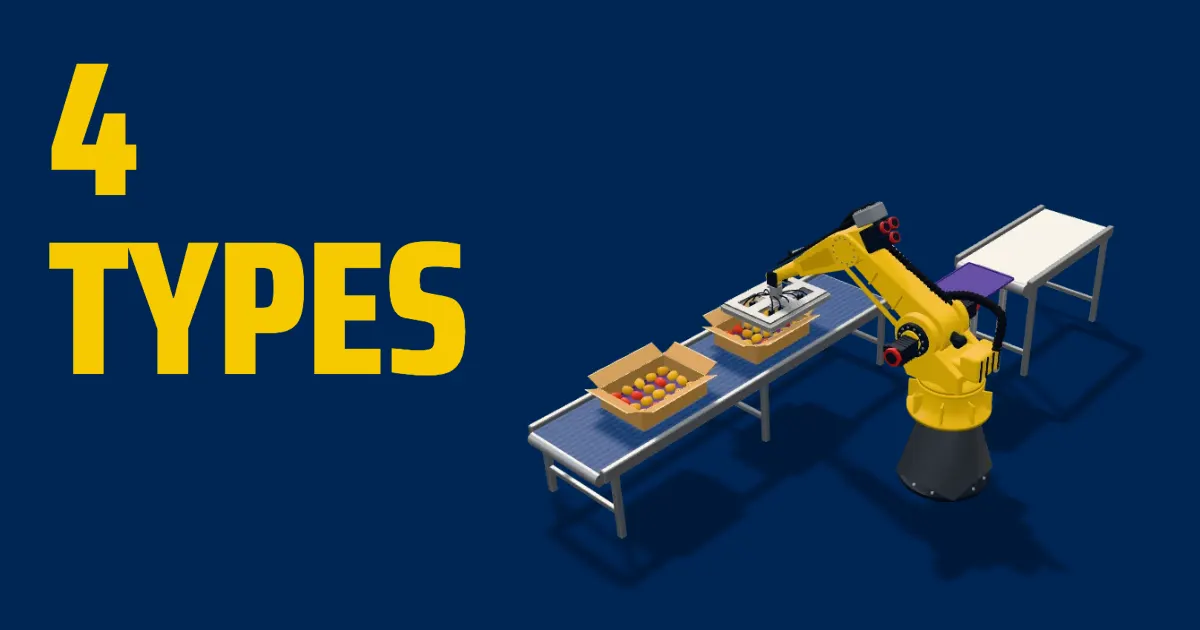
A fruit case packer is the machine that puts fruit in the box at the end of the line, piece by piece with a robot, in bulk or by weight. Which one suits you depends on whether your customer pays for a pack pattern or for kilos.
A fruit case packer fills or places fruit in a box, tray or clamshell at the end of the packing line. Four types are published: pick and place robot (Greefa, up to 100 pieces per minute, 2026), bulk filler, weigher-filler (Packett, up to 5 boxes per minute, 2026) and clamshell filler (TOMRA, up to 160 per minute, 2026). Agro Robotics, in San Luis Potosí, Mexico, makes a case packer that places fruit piece by piece.
In this article
Search for “encajillador” on a job board in Guanajuato and you get a footwear opening in León: putting shoes in boxes, tidy and presentable (SimplyHired, expired posting, checked on November 4, 2026). In fruit packing you hardly hear that word. Before you ask for quotes, it helps to settle what a fruit case packer is, the machine Mexican suppliers list as encajadora de fruta, because four machines that fill the box in very different ways are sold under that name.
It is the equipment that closes the line. It receives fruit already washed and sized and leaves it in the box, the tray or the clamshell, at the weight or in the pack pattern your customer asked for. In Mexico some people also call it encajillador, and catalogs list it as robot empacador (packing robot) or llenadora de cajas (box filler). The robotic case packer for fruit from Agro Robotics is one of those that place piece by piece. At the other end of the line, the one that takes fruit out of the field crate, works the fruit crate tipper.
What does encajillar mean, and why is it rare in fruit?
A cajilla, in the definition W-Pack-It gives, is a cardboard package that protects and presents individual products. From there comes the verb encajillar: putting those packages into a larger box. It belongs to contract packing and consumer goods; Novoempaques, on its services page, offers secondary encajillado of promotional packs and non-perishable items (checked on November 4, 2026).
The paperwork of fruit packing leaves it out. The good practices manual by CIAD, a Mexican food research center, with SENASICA, Mexico’s agricultural health and food safety agency (2002), writes “empacado manual, automático” (manual, automatic packing) and then “entarimado” (palletizing). NMX-FF-016-SCFI-2016, the Mexican standard for Hass avocado, speaks of envase and embalaje, container and packaging. Neither the avocado impact study (2017) by INIFAP, Mexico’s national agricultural research institute, nor its Folleto Técnico 37 on mango (2019) uses “encajillar”. Google does not pick it up either: type “encajilladora” and it suggests encajadora automática, encajadora and encajadora de cítricos, which mean automatic case packer, case packer and citrus case packer (test of November 4, 2026).
If people on your packing floor say encajillador, leave it that way, and when you search for a supplier in Spanish type encajadora. With “encajonadora” something else happens: it brings up beverage lines. DISPAC, for example, uses it for glass bottles.
The four types of fruit case packer
This table gathers what each manufacturer publishes on its site. These are declared figures, with no independent measurement, checked on November 4, 2026.
| Type | How it fills the box | Published figure | Who publishes it |
|---|---|---|---|
| Pick and place robot | Takes each piece with a suction cup or gripper and places it in a pack pattern | Up to 100 pieces per minute and 1.2 t/h in avocado | Greefa, SmartPackr |
| Bulk filler | Fruit goes in loose, by count or by weight, dry | Does not publish capacity on its spec sheet | MAF Roda, box fillers |
| Weigher-filler | Fast belts and a fine belt that closes the target weight | 4 boxes per minute; up to 5 in returnable plastic crates, field crates or cardboard boxes | Rochín; Packett |
| Clamshell filler | Fills containers from 125 g to 5 kg by weight, with small fruit | Up to 160 clamshells per minute | TOMRA, CURO |
One case slips in among the four: the mechanical case packer that works by layers. ABC Pack publishes its FAST3 for citrus, with a gripper that picks the fruit by suction and lowers it through Teflon-coated funnels: 1,000 boxes per hour of 20 × 30 cm and 500 of 50 × 30 cm in two layers. That is 16.7 and 8.3 boxes per minute (Agro Robotics calculation), well above what a robot that places piece by piece publishes, in exchange for staying with one fruit and a few formats.
When is a weigher enough, and when do you need a robot?
The math starts with a question for your sales team: do you get paid by the kilo or for presentation?
| If your case is | Usually enough | The detail that decides |
|---|---|---|
| Sold by weight, fruit that can take contact | Weigher-filler or bulk filler | At 5 boxes per minute with a 10 kg box you get 3 t/h (Agro Robotics calculation): a 6 t/h line calls for two machines |
| Even sizing and every piece in view, like avocado in a 25 lb box | Pick and place robot or a packing table with a crew | NMX-FF-016-SCFI-2016 requires uniform contents: same origin, variety, quality and size in each container |
| Several formats in one shift, little fruit of each | Packing table | Rochín publishes a module for placing round tomato, bell pepper, mango and avocado by hand |
| Small fruit in clamshells | Clamshell filler | TOMRA publishes it for cherry, blueberry and tomato |
| Short season at one shift | Packing table | You pay for the machine all year and it saves only on the days it runs; run the numbers in the payback calculator |
A well set up packing table also counts as an answer. If your problem is a shortage of people at peak, first review the options in labor shortage in fruit packing houses.
Now, the pack pattern has its own tests. If your customer asks for the label in view on each piece, the crew takes care of it by hand at the table. A label in view is the test worth asking of a machine that places fruit in a pattern. Greefa, for example, already publishes orientation by calyx and stem on its i-PACKR, for now only in apple.
Suction cup or gripper for your fruit?
MAF Roda describes its Speed Packer with pocketed plates matched to the size and suction cups that lift the fruit. ABC Pack uses suction. In the spec sheets reviewed, fruit care is told in words; none publishes a damage measurement.
So ask for the test with your fruit, because the skin of a Hass and the skin of a bell pepper grip differently. And keep the test open past that day. INIFAP (2017) found that the impacts did not affect the external quality of the avocado and did affect the internal quality, with darkening and air cavities in the flesh that show only at eating ripeness.
A demonstration that ends when the box closes leaves the quality question unanswered. Release height goes into the same review: Perkins and others, in Talking Avocados (2018), recommend drops under 15 cm for hard avocado. Measure yours with the fruit drop height tool.
What should you check on the spec sheet before a quote?
Four points save weeks of emails:
- The unit. Pieces per minute, boxes per minute and metric tons per hour measure different things. Greefa gives 100 pieces and 1.2 t/h for the same machine (2026), and the two match with a 200 g piece (Agro Robotics calculation). The full conversion is in how many avocados per minute a robot packs.
- The size. SmartPackr publishes fruit from 60 to 100 mm and a box or tray of up to 400 by 600 mm (Greefa, 2026). If your box falls outside that, the conversation ends there.
- The formats. Ask how many fit in the offer and how many minutes the changeover from one to another takes, with your packing line manager in the room.
- Who services it. Spare parts, a technician in your area and what happens if it fails in the middle of the season. The topic has its own page: in-season support.
What does Agro Robotics declare about its case packer?
Agro declares, in its 2021 presentation, a machine that identifies and picks several presentations and places them in a corrugated or plastic box. To date there are only public demonstrations, so ask to see it with your fruit before you decide, and ask how many pieces per minute it places at your size.
One fact to close the meeting: section 8.3 of NMX-FF-016-SCFI-2016 asks only that the avocados be placed in the container with care to avoid damage. It leaves open whether a person, a table or a robot does it.
Frequently asked questions
Are a case packer and a packing robot the same thing?
My customer buys by the kilo. Do I still need a robot?
In our packing house we call it encajillador. Are we wrong?
Will a case packer bruise my fruit?
Sources
- Greefa, SmartPackr for avocados, checked Nov 4, 2026 (in Spanish)
- MAF Roda México, Speed Packer, checked Nov 4, 2026 (in Spanish)
- MAF Roda México, box fillers, checked Nov 4, 2026 (in Spanish)
- Industrias Rochín, weigher-filler for boxes, checked Nov 4, 2026 (in Spanish)
- Industrias Rochín, packing module, checked Nov 4, 2026 (in Spanish)
- Packett, weigher-filler, checked Nov 4, 2026 (in Spanish)
- TOMRA, CURO, checked Nov 4, 2026
- ABC Pack, FAST3 citrus case packer, checked Nov 4, 2026 (in Spanish)
- CIAD with SENASICA, Manual de Buenas Prácticas Agrícolas, 2002 (in Spanish)
- NMX-FF-016-SCFI-2016, non-industrialized food products, Hass avocado (in Spanish)
- Herrera-González and Salazar-García, INIFAP, impacts on Hass avocado on the packing line, 2017 (in Spanish)
- Osuna García, INIFAP, Folleto Técnico 37 on mango packing, December 2019 (in Spanish)
- Perkins and others, Talking Avocados, Avocados Australia, Jan 31, 2018
- W-Pack-It, definition of cajilla, checked Nov 4, 2026 (in Spanish)
- Novoempaques, encajillado of products, checked Nov 4, 2026 (in Spanish)
- SimplyHired México, expired job posting for an encajillador in León, checked Nov 4, 2026 (in Spanish)
- Google, suggestions for encajilladora in Mexico, test of Nov 4, 2026 (in Spanish)
- DISPAC, encajonadora and desencajonadora, checked Nov 4, 2026 (in Spanish)