
Lime packing line robots in Mexico
In limes, dumping is a clear case and the outfeed goes by weight. Here we tell you where a robot fits and where another machine serves you better.
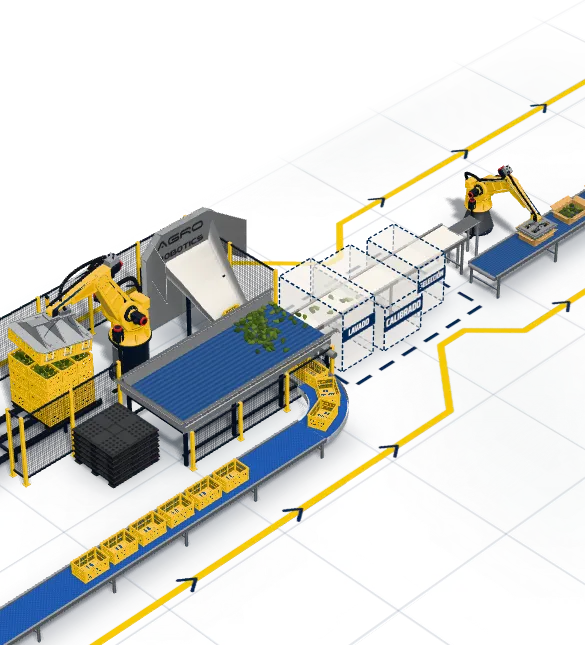
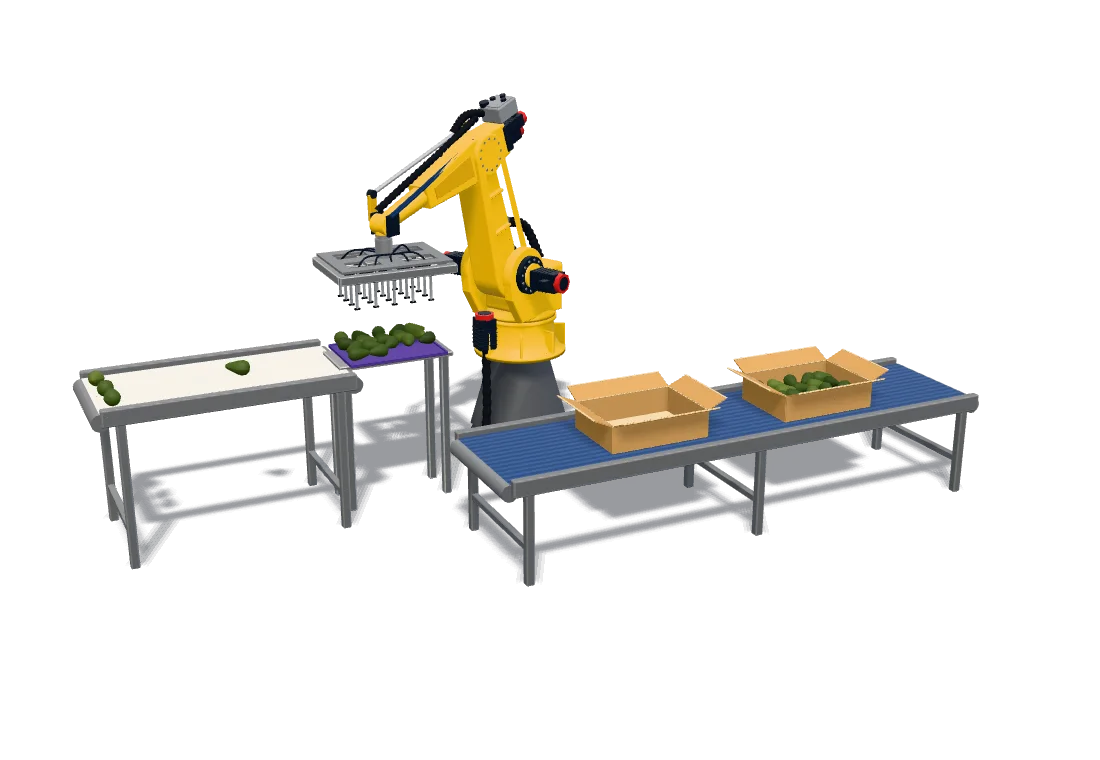
Illustrative demonstration. Your cell comes from your layout.
Where it fits and where it does not
| Station | Agro robot? | Why |
|---|---|---|
| Dumping plastic crates stacked on pallets | Yes | Same heavy load as in other fruit: it takes away lifting crates every shift |
| Dumping bulk fruit or gondolas | No | The crate tipper works with crates |
| Filling by weight, 40 lb box | Rarely | Limes tolerate drop filling, and a weigh filler is simpler |
| Packs with a set pattern | We review it | If your customer asks for a pack pattern, we review with your fruit whether the robot keeps up |
What we know about limes in Mexico
Mexico produced 3.275 million metric tons of limes in 2024, led by Michoacán, Veracruz and Colima, and exports more than 750 thousand metric tons a year, nearly all of it to the United States (USDA, January 2026). Persian lime production is concentrated in Veracruz and Mexican lime, also sold as Key lime, in Michoacán.
There is no public registry of lime packing houses. That is why we ask for your data: how many crates a day, in which season and on how many shifts.
Which machine suits a lime packing line?
How are limes packed for export?
Does Agro already have cells installed in limes?
Keep reading
How do your limes arrive?
Tell us whether you receive in crates, in bins or in bulk, and which packs you ship. If the machine does not suit you, we will say so.